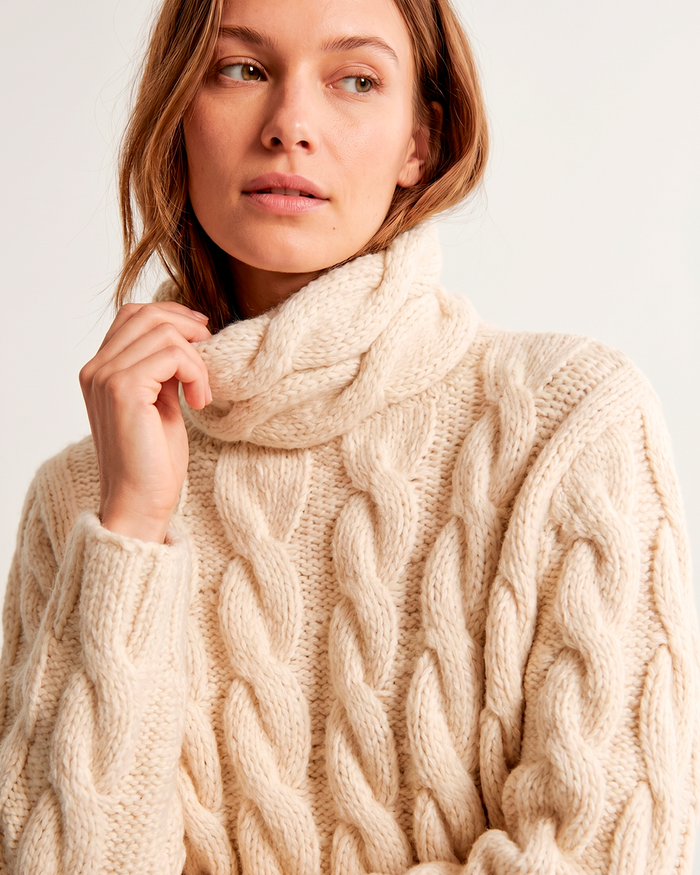
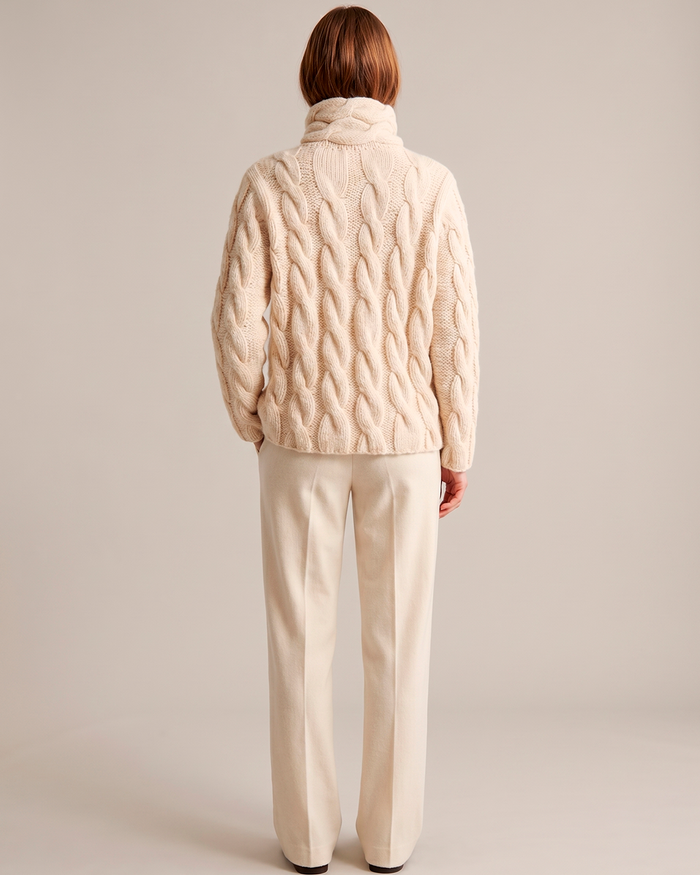
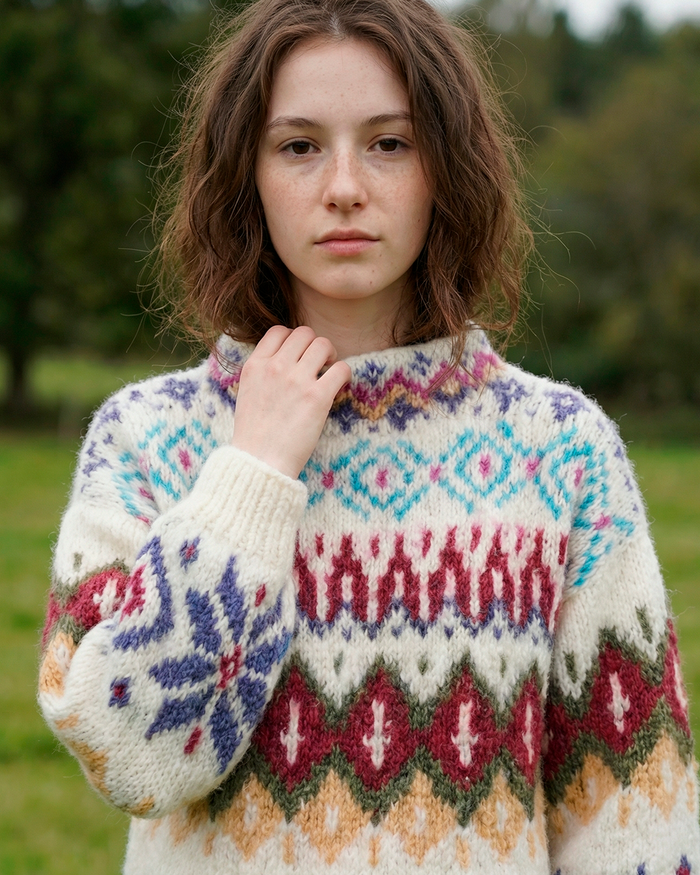
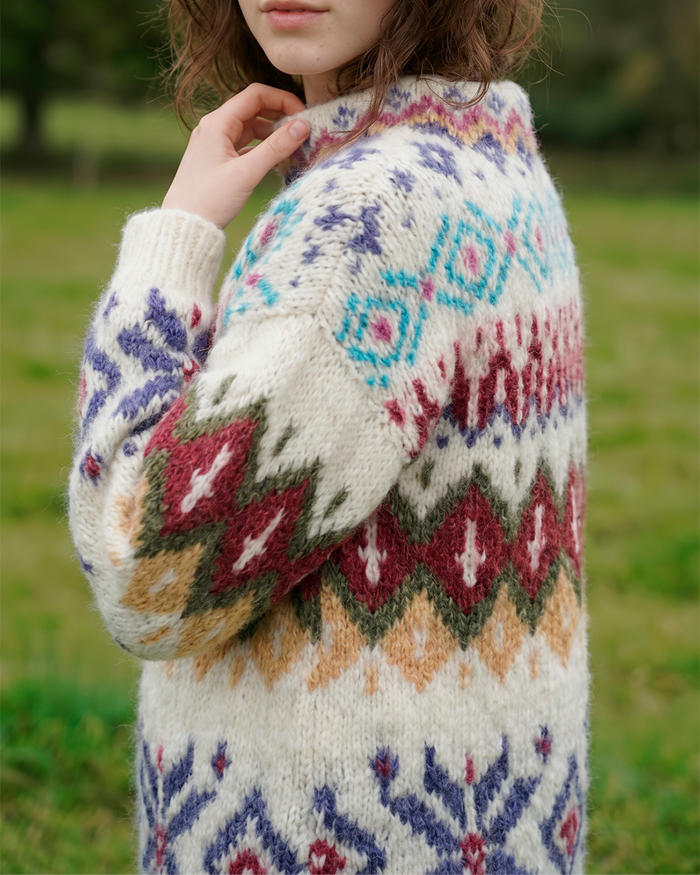




Killa Paspuel
Carchi, Ecuador
Cable & lace specialist. 34 years of practice.
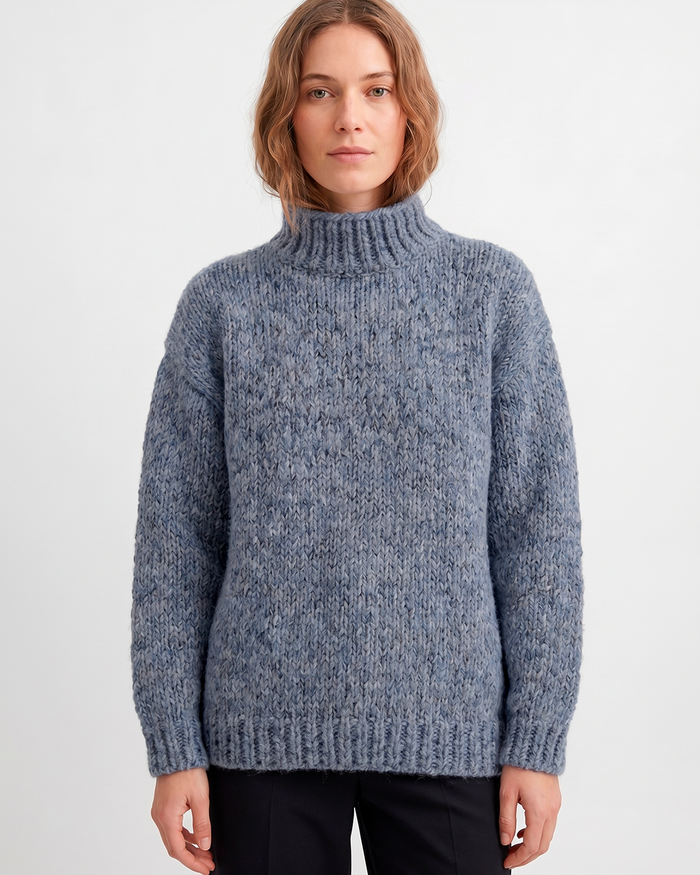
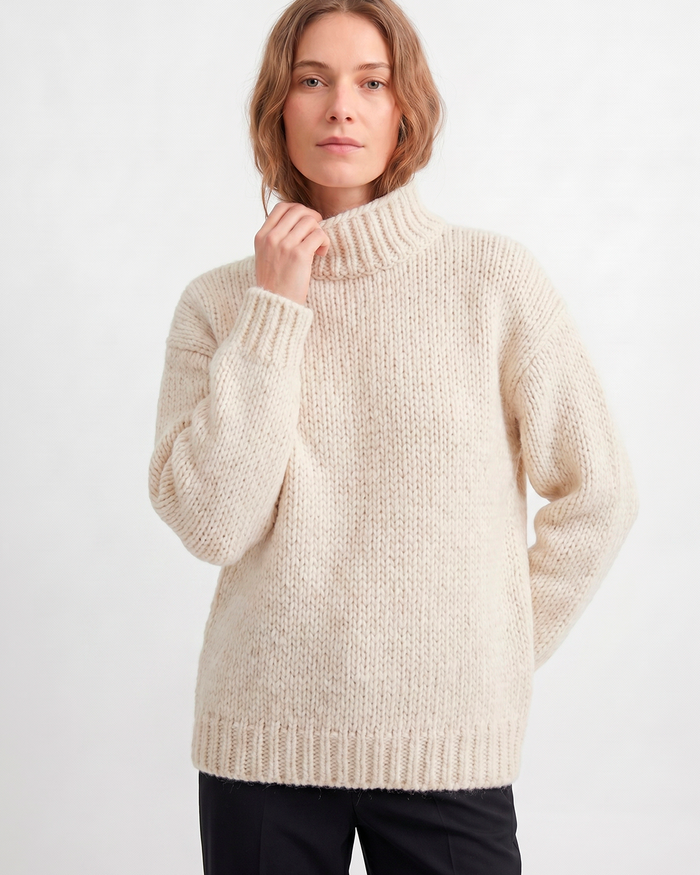
Baby Alpaca · Handcrafted · Andes
Each garment carries centuries of ancestral knowledge worn by those who understand that true luxury takes time.
Explore the HeritageThe AYNI Manifesto
Hand-knitting is disappearing. As fast fashion floods the world with the disposable and the anonymous, the women of the Andes continue weaving meaning into fiber. Stitch by stitch, generation by generation.
Ayni is the Quechua principle of reciprocity: I give so that you may give. We exist to honor this exchange between artisan and wearer, between past and present, between the earth and those who inhabit it.

Macro photograph · Hand-knitted alpaca texture
The Material

Harvested once a year from the first shearing of the alpaca, this fiber is seven times warmer than wool, softer than cashmere, and completely free of lanolin.
Sourced exclusively from highland alpaca farms above 4,000m in the Peruvian Andes, where thin air and cold nights produce the finest, most lustrous fiber.
Alpacas graze without uprooting grass, leave minimal hoofprints, and require no chemicals to process. Zero impact luxury.
Hollow micro fibers trap heat with extraordinary efficiency, worn in the Andes for 5,000 years for good reason.
Unlike synthetics, baby alpaca grows more supple with age. Designed to be passed down, not thrown away.
At under 18 microns, baby alpaca rivals cashmere in hand-feel — without the ethical complexities of goat farming.
The Makers
AYNI works directly with fifteen master knitters from communities in Ecuador. Each artisan is a named collaborator — not an anonymous manufacturer. Their names travel with every garment.
Carchi, Ecuador
Cable & lace specialist. 34 years of practice.

Carchi, Ecuador
Andean colorwork & intarsia. 8 years of practice.

Imbabura, Ecuador
Fine gauge & drape construction. 7 years of practice.

Imbabura, Ecuador
Texture & sculptural form. 12 years of practice.
The Edit — 2026


Fast Fashion
AYNI


